


Page Under Maintenance
This page is currently under maintenance.
Please communicate at the hospital help desk for assistance.
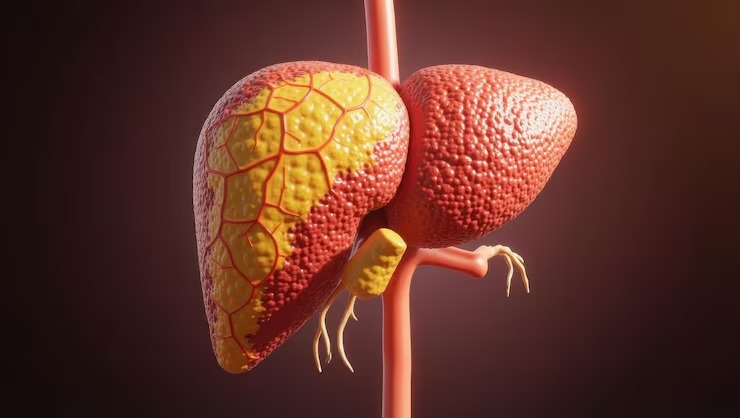
Most people discover they have fatty liver not because something hurts, but because a routine ultrasound picks it up by accident. That is the quiet, unsettling nature of this condition. Non-alcoholic fatty liver disease (NAFLD) now affects an estimated 16% to 32% of India's adult population, roughly 120 million people, and the numbers are rising fast. What makes it particularly tricky in an Indian context is that you don't have to be overweight to have it.
In this article, Dr. Aabha Nagral, Head of Hepatology at Jaslok Hospital and Research Centre and Maharashtra's first female liver transplant physician with over 30 years of experience, explains exactly what fatty liver is, why so many slim Indians develop it, how it is diagnosed, what complications follow if it is ignored, and critically, how lifestyle changes can actually reverse it.
Watch the full expert interview with Dr. Aabha Nagral on YouTube here
Fatty liver disease is a condition in which fat makes up more than 5% of the liver's total weight. At normal levels, a small amount of fat in the liver is healthy and expected. Once that threshold is crossed, it can set off a chain of damage that, over years, can silently progress to liver cancer or the need for a transplant.
For a long time, doctors assumed that liver fat was almost always caused by alcohol. That changed in 1980 when pathologist Dr. Ludwig at the Mayo Clinic identified a group of patients whose liver biopsies looked identical to alcohol-related damage, except these patients consumed no alcohol at all. He called it Non-Alcoholic Fatty Liver Disease (NAFLD). Today, NAFLD is the most common liver condition worldwide, and it is considered far more than just a liver problem. It is the visible tip of a much larger metabolic iceberg.
Yes, and this is one of the most important and underappreciated facts about liver health in India. Many people assume they are safe from fatty liver because they are not visibly obese. This assumption is wrong, and it leads to delayed diagnosis.
Dr. Nagral explains a concept called the YY Paradox, named after two researchers, Yudkin from the UK and Yajnik from India. Both had the same Body Mass Index (BMI), which is the standard measure used to define obesity, yet their body compositions were completely different. Dr. Yajnik had far more body fat and far less muscle mass than Dr. Yudkin, despite weighing the same. This phenomenon is especially common in Indians.
A recent 2025 study published in Frontiers in Endocrinology confirms that lean NAFLD (where the patient has a normal BMI) represents up to 45% of NAFLD cases in Asian populations, compared to much lower rates in Western countries. The driver is not total body weight but visceral fat: fat that accumulates around internal organs rather than under the skin.
If your waist size is large even though your overall weight seems normal, there is a real chance your liver and other vital organs are carrying excess fat. In Indians, abdominal obesity is a more reliable warning signal than BMI alone. A person can weigh 62 kg and still have fatty liver if the fat is concentrated around the waist and abdomen rather than distributed evenly.
This is why body composition analysis, a quick 5-minute test available at Jaslok Hospital, gives a far more accurate picture of your liver risk than a standard weighing scale ever could.
Fatty liver is not caused by one thing. It is the end result of a cluster of metabolic problems that feed into each other. The single biggest driver is obesity or being overweight, but as we have seen, that does not tell the full story.
The key causes and risk factors include:
Most people with fatty liver have no symptoms at all, which is precisely what makes early detection so important. The majority of cases are found incidentally during abdominal ultrasounds done for unrelated reasons, or when liver blood tests (LFT) come back elevated during a routine health check-up.
When symptoms do appear, they are mild and easy to dismiss: a dull heaviness or discomfort in the upper right side of the abdomen (where the liver sits), or slight pain when changing positions. This is caused by fat accumulating inside the liver and stretching the organ's outer capsule.
By the time more obvious symptoms appear, such as swollen legs, a distended abdomen, vomiting blood, or confusion, the disease has typically progressed to cirrhosis with complications. At that stage, options are limited and treatment costs escalate dramatically.
The most common first step is an abdominal ultrasound, but ultrasound alone misses a significant number of cases. According to Dr. Aabha Nagral, ultrasound has a sensitivity of only around 30% for detecting fatty liver. That means in 70% of actual cases, a standard ultrasound may not pick it up at all. A clear ultrasound report does not mean a clear liver.
The test that gives a far more precise answer is a FibroScan (transient elastography). FibroScan measures two things simultaneously: the exact percentage of fat in the liver and the degree of fibrosis (scarring). This matters because the scarring level, not just the fat level, determines how close a patient is to cirrhosis. MR Elastography (a specialised MRI) is another option, though FibroScan is the far more common choice for routine monitoring.
If you have any of the following risk factors: diabetes, hypertension, heart disease, obesity, or a family history of liver disease, we recommend the following during every annual check-up:
Untreated fatty liver can progress through four stages over a period of years, culminating in cirrhosis and liver cancer. The progression is not inevitable, but the risk is real and often underestimated.
The stages are: simple fatty liver (NAFLD), then inflammation and liver cell damage (NASH or Non-Alcoholic Steatohepatitis), then fibrosis (scarring of liver tissue), then cirrhosis. Cirrhosis, once it decompensates, leads to a cascade of complications including fluid accumulation in the abdomen, leg swelling, internal bleeding from ruptured blood vessels, liver-related brain dysfunction, and liver cancer.
Fatty liver is now one of the leading causes of liver cancer in India, a fact that was barely true a decade ago. The financial impact of reaching this stage is enormous. A liver transplant at a reputable hospital costs approximately ₹22 lakh or more, and that figure does not account for the years of hospitalisation, dialysis, and intensive care that often precede it. Prevention costs a fraction of that.
Yes, fatty liver can be reversed, and in cases of early-stage cirrhosis, even that reversal is possible with sustained lifestyle intervention. Dr. Nagral describes a patient who came to Jaslok Hospital at 40 years of age, weighing 108 kg, with undiagnosed hypertension, diabetes, high cholesterol, and cirrhosis discovered by accident during a COVID-19 CT scan. Her parents and sister also had cirrhosis, making this a clear case of familial metabolic syndrome.
After treatment of her depression (which was worsening her eating behaviour), combined with dietary changes, exercise, and structured counselling, she lost 38 kg over one year. At the end of 12 months, her liver tests were completely normal and her FibroScan showed her cirrhosis had reversed. This is remarkable because standard medical teaching holds that cirrhosis is irreversible. Yet it happened because she addressed the root causes completely.
The message from Dr. Aabha Nagral is straightforward: lifestyle change accounts for 90% of the treatment for fatty liver. Medication accounts for only 10%.
There is no need to follow a named diet like Keto or Atkins, many of which are difficult to sustain long-term. Instead, a practical and sustainable plate model works well:
This is the reverse of how most Indian meals are built, where roti or rice makes up more than half the plate. Reduce portion sizes first before trying to eliminate foods entirely. Sweets and sugar are the biggest dietary enemy for fatty liver. Soft drinks, packaged snacks, biscuits, ready-made chivda, and processed foods should all be avoided. Cooking at home using limited saturated fat (ghee, butter, dalda) in moderation is the right direction.
Crash dieting must be specifically avoided. Rapid weight loss disrupts fat metabolism in the liver and can actually accelerate fat accumulation rather than reduce it.
20 minutes of moderate exercise every day is enough to make a meaningful difference to liver health. This does not require a gym. For IT professionals or desk-bound workers, simply standing up and walking for a few minutes every hour prevents the sustained metabolic slowdown associated with sedentary work. Taking stairs instead of the lift, doing household chores actively, and walking during phone calls all contribute.
The key principle is consistency over intensity. A daily 20-minute walk done every single day beats an occasional intense session followed by weeks of inactivity.
Sleep is the most neglected pillar of liver health. A randomised trial comparing two groups given identical calorie intake found that the group sleeping only 5 hours gained significantly more weight than the group sleeping 8 hours. Poor sleep disrupts hormones that regulate hunger and fat storage, making it harder to maintain the dietary discipline needed to manage fatty liver.
Aligning sleep with natural daylight cycles (sleeping earlier, waking earlier) is the goal. Late-night eating combined with screen time until 2 or 3 am is one of the worst combinations for metabolic health.
Jaslok Hospital's Fatty Liver Clinic brings together hepatologists, nutritionists, diabetologists, exercise physiologists, and psychologists under one roof, designed specifically because most fatty liver patients are simultaneously managing multiple conditions.
The inclusion of psychology in the team is deliberate. As Dr. Nagral explains, eating behaviour is driven more by the mind than by hunger. Stress eating, binge eating at night, and depression-driven overconsumption are extremely common in patients with metabolic syndrome. Without addressing these psychological drivers, dietary and exercise advice rarely sticks.
The clinic runs fortnightly reviews where the entire team discusses each enrolled patient, identifies which specific aspect of their management needs more attention in the next cycle, and adjusts the programme accordingly. The 3-month structured programme aims not just to reduce liver fat but to prevent patients from ever needing a transplant.
Fatty liver is no longer a condition that can be dismissed as "just a bit of fat." It is a marker of broader metabolic dysfunction, a precursor to cirrhosis and liver cancer, and it is now affecting millions of Indians who don't even know they have it. The good news is that it responds better to lifestyle intervention than almost any other chronic liver condition.
Starting today, not next month, with small changes to diet, 20 minutes of daily movement, and consistent sleep is where reversal begins. For a personalised assessment, including FibroScan and body composition testing, consult the Hepatology team at Jaslok Hospital's Fatty Liver Clinic.
Yes. In India, this is referred to as "Lean NAFLD" and it affects a significant proportion of Indian patients due to high visceral fat accumulation despite a normal body weight. Waist circumference is a more reliable indicator of fatty liver risk in Indians than BMI alone.
Ultrasound has only about 30% sensitivity for detecting fatty liver, meaning it misses the condition in the majority of cases. A FibroScan (transient elastography) gives a more accurate picture of both liver fat percentage and the degree of fibrosis or scarring.
In early-stage cirrhosis, reversal is possible with sustained lifestyle change. At Jaslok Hospital's Fatty Liver Clinic, Dr. Aabha Nagral has documented cases where FibroScan confirmed cirrhosis reversal following significant weight loss, dietary correction, and psychological support.