

Page Under Maintenance
This page is currently under maintenance.
Please communicate at the hospital help desk for assistance.
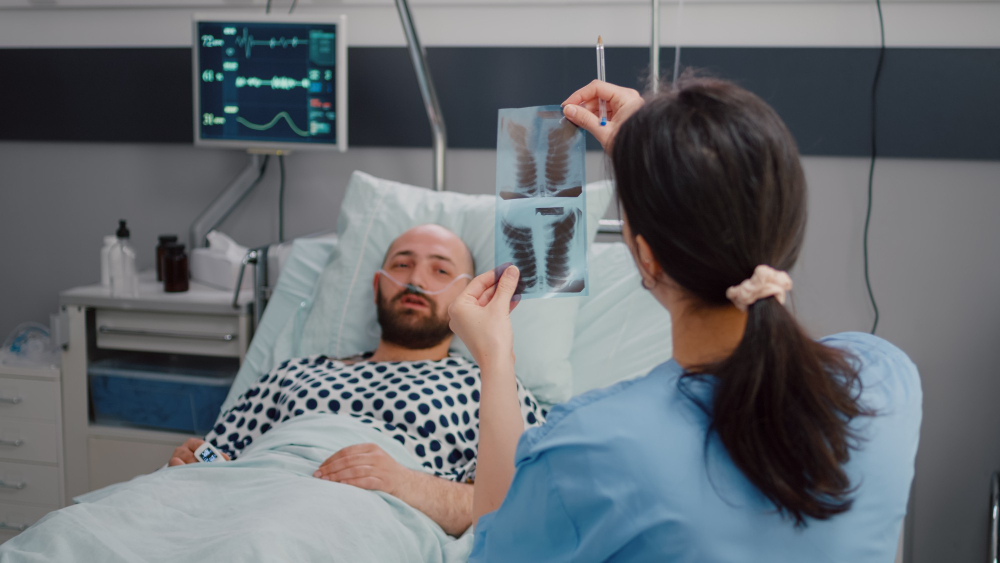
A patient loses close to 1.9 million brain cells every minute a stroke goes untreated. A person in cardiac arrest loses 7% to 10% of their survival chance for every minute defibrillation is delayed. In sepsis, each hour without antibiotics measurably raises the risk of death. These are not rounded-off estimates from a textbook. They are numbers pulled from real clinical data, and they explain, in the simplest way possible, why early diagnosis is not a nice-to-have in critical care — it is the difference between a full recovery and a life lost.
Critical care is the branch of medicine built around exactly this pressure. ICU teams, emergency physicians, and trauma units work inside a shrinking window, and what they do in the first few minutes often matters more than what happens over the following days. This blog looks at why timely diagnosis changes outcomes, how hospitals catch problems early, and what patients and families should watch for.
Early detection sounds like a simple idea, but in a hospital setting it is a coordinated system — monitors, trained eyes, and fast decision-making working together before a patient's condition turns critical. It is less about one dramatic moment and more about catching small warning signs before they become emergencies.
The term "golden hour" comes from trauma and stroke medicine, and it describes the first 60 minutes after a medical emergency begins. During this window, treatment has the greatest chance of reversing damage rather than simply managing it. Doctors use this period to run scans, start medication, or begin surgery. Data from stroke registries shows that patients treated within this window are far more likely to walk out of the hospital without major disability. The golden hour is not a strict deadline — it is a target that pushes every part of the care chain, from ambulance dispatch to the emergency room, to move faster.
Sepsis is the body's extreme reaction to infection, and it can shut down organs within hours if missed. According to the CDC, sepsis contributes to roughly a third of all in-hospital deaths in the United States, and researchers estimate that up to 80% of sepsis deaths could be prevented with timely treatment. Studies published in Clinical Infectious Diseases found that every additional hour before antibiotics increases mortality risk in septic shock patients, with the sharpest rise appearing after the first three hours. This is why ICU protocols now flag suspected sepsis cases within minutes of arrival, not hours.
A stroke happens when blood flow to part of the brain is blocked or reduced, and brain tissue starts dying almost immediately. Medical researchers estimate that close to 1.9 million neurons are lost every minute a blocked artery stays untreated — roughly equal to the brain aging 3.6 years for every hour of delay. Clot-busting medication (tPA) works best within 4.5 hours of symptoms starting, and mechanical clot removal can extend that window further in select cases. This is why stroke care teaches a simple rule: note the exact time symptoms began and get to a hospital immediately, because minutes decide how much function a patient keeps.
Numbers make this easier to picture than descriptions do. Below is a quick look at three common critical care emergencies and what delay actually costs a patient.
|
Condition |
What Happens Without Fast Treatment |
Source |
|---|---|---|
|
Cardiac arrest |
Survival drops 7%–10% for every minute without defibrillation |
American Heart Association |
|
Stroke |
About 1.9 million brain cells die per minute untreated |
Journal of Neurosciences in Rural Practice |
|
Sepsis |
Mortality rises with each hour of delayed antibiotics, especially after 3 hours |
Clinical Infectious Diseases journal |
Out-of-hospital cardiac arrest survival in the United States sits at around 9–10%, according to the American Heart Association, largely because most people never receive CPR or a defibrillator shock in time. Immediate bystander CPR can double or triple survival chances. Inside hospitals, one study found patients defibrillated within four minutes had a 36.4% mortality rate, compared to 90.9% mortality in those who never received defibrillation at all. That gap alone shows how much a few minutes of early diagnosis and response can change.
Beyond survival, delayed diagnosis often means longer ICU stays, more organ support, and slower recovery even for patients who do pull through. Research on ICU muscle wasting found that more than half of critically ill patients lost significant muscle mass within the first week, and those with longer stays fared worse on almost every measure. A late diagnosis doesn't just risk death — it often adds weeks of rehabilitation, higher medical costs, and a harder road back to normal life.
Modern ICUs don't wait for a patient to visibly decline. They use scoring systems — such as APACHE II or early warning scores based on vital signs — to flag subtle changes in heart rate, oxygen levels, or blood pressure before a crisis hits. These tools exist because human judgment alone, however skilled, can miss quiet deterioration. Structured, repeatable checks catch it instead, which is a core reason timely diagnosis has become standard practice rather than an occasional advantage.
Getting ahead of a crisis takes more than good instincts. It takes equipment, protocols, and people trained to notice what a monitor alone might not show.
Continuous monitoring of heart rate, blood pressure, oxygen saturation, and respiratory rate forms the backbone of ICU care. Small shifts in these numbers, tracked over hours, often reveal a problem before a patient feels unwell. Nurses and doctors use trend lines, not single readings, because one abnormal number can be noise while a pattern is a warning. This constant tracking is what allows teams to intervene before a slow decline becomes a full emergency.
CT scans, MRIs, and rapid blood panels are what turn a suspicion into a confirmed diagnosis. In stroke care, for example, an immediate CT scan tells doctors whether a clot or a bleed caused the event — and the treatment for each is completely different. Speed here isn't about convenience; it decides which treatment path a patient can safely receive. Hospitals that keep imaging and lab turnaround times short consistently report better outcomes across critical conditions.
No single specialist manages a critical care case alone. Intensivists, nurses, respiratory therapists, and pharmacists work as one unit, often making decisions within minutes of a shift in a patient's condition. This teamwork matters because critical illness rarely affects just one organ system — a sepsis case can affect the lungs, kidneys, and heart together. Having several trained eyes on a patient at once shortens the time between a symptom appearing and a treatment beginning.
Timing and location both shape how quickly a diagnosis happens, and neither should be left to chance.
Most critical illnesses are first identified in the emergency room, which is why ER triage systems are built to sort patients by urgency within minutes of arrival. A well-run triage process asks simple but pointed questions — when symptoms started, how severe they are, and whether vital signs are unstable — to decide who needs immediate attention. This first contact often sets the entire treatment timeline that follows.
Many emergencies begin outside the hospital, so families play a real role in early detection. Sudden slurred speech, chest pain that doesn't ease with rest, confusion, or a high fever with a fast heartbeat are signs that deserve an immediate call for help rather than a wait-and-see approach. Recognising these signs at home is often the very first step in the chain that leads to timely treatment.
Every transfer between facilities adds time, and in critical care, that time has a cost. Patients moved from smaller centres to specialised critical care units can lose valuable minutes in transit, which is why direct access to advanced diagnostic and ICU facilities matters. Hospitals equipped to diagnose and begin treatment on-site, without needing a transfer, tend to see better outcomes in time-sensitive conditions like stroke and sepsis.
Good outcomes in critical care rarely come down to luck — they come from infrastructure and people built around speed.
A modern ICU depends on continuous monitoring equipment, rapid-access imaging, and lab systems that return results quickly enough to guide same-hour decisions. Facilities like Jaslok Hospital in Mumbai maintain critical care units designed around this principle — keeping diagnostic tools close to the bedside so that identifying a problem and acting on it happen in the same breath, not across separate departments.
Critical illness doesn't follow office hours, so ICU teams need to be present and alert at 3 a.m. just as much as at 3 p.m. Round-the-clock staffing by intensivists and critical care nurses ensures that a change in a patient's condition is caught the moment it happens, not on the next scheduled round. This constant readiness is what turns early warning signs into early action.
Beyond machines and protocols, early detection depends on a culture that takes small complaints seriously. Teams trained to ask the right questions and escalate concerns quickly — rather than waiting for a clear crisis — give patients the best chance at a fast, accurate diagnosis. That mindset, paired with the technology to back it up, is what timely, well-coordinated critical care looks like in practice.
Relevant Blog : How to Prepare Emotionally for a Loved Ones ICU Journey
Critical care medicine is, at its core, a race against time. The data is consistent across every major emergency — stroke, sepsis, cardiac arrest — the sooner a problem is caught, the better the outcome. Hospitals that invest in monitoring, trained staff, and fast diagnostics aren't just following best practice; they're directly improving how many patients walk out healthy. For patients and families, the takeaway is just as simple: don't wait out unusual symptoms, because in critical care, minutes genuinely decide outcomes.
Q) What is early diagnosis in critical care?
It means identifying a life-threatening condition — such as sepsis, stroke, or cardiac arrest — as soon as symptoms appear, rather than after the condition has already caused organ damage.
Q) Why is timely diagnosis so important in the ICU?
Because conditions like sepsis and stroke worsen by the hour or even the minute. Studies show survival and recovery chances drop sharply with every hour of delay.
Q) How is early disease detection achieved in hospitals?
Through continuous vital sign monitoring, rapid lab and imaging turnaround, structured warning scores, and multidisciplinary teams trained to act on small changes quickly.