


Page Under Maintenance
This page is currently under maintenance.
Please communicate at the hospital help desk for assistance.
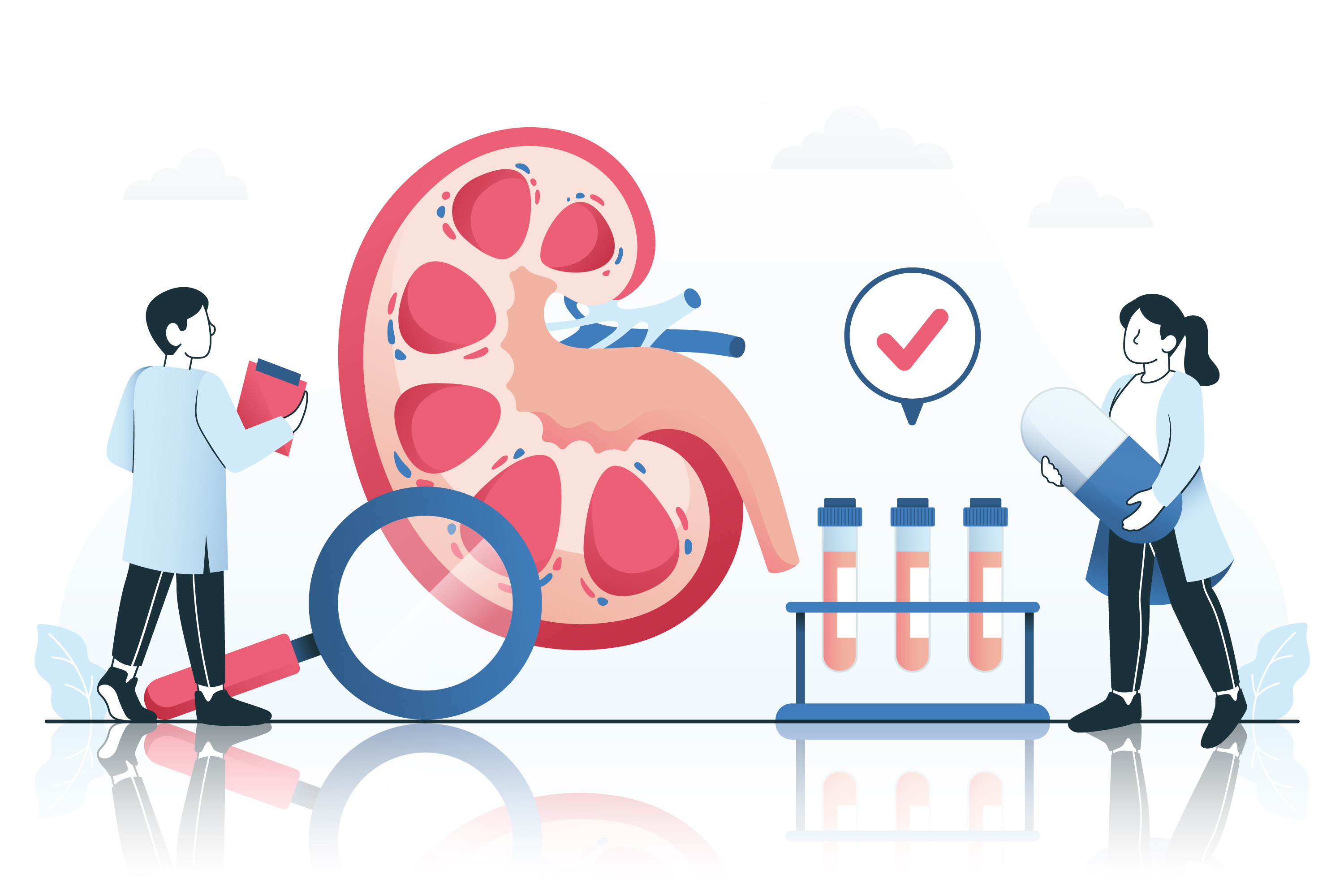
India is the diabetes capital of the world — and with that title comes a rapidly rising risk of kidney disease. Yet most patients only seek help when significant damage has already been done. Dr. M.M. Bahadur, Senior Nephrologist with nearly 40 years of experience at Jaslok Hospital, sat down with us to share everything you need to know about protecting your kidneys — from early warning signs to dialysis, transplant, and beyond.
According to Dr. Bahadur, diabetes and hypertension together account for approximately 50% of all kidney disease cases in India. The remaining cases stem from:
The key takeaway: half of all kidney failure cases are potentially preventable through better management of just two conditions — diabetes and high blood pressure.
One of the most dangerous aspects of kidney disease is that 30–35% of patients experience no obvious symptoms until the disease is already advanced. That's why knowing the subtle warning signs is critical.
1. Loss of Libido A decrease in sexual drive is an underappreciated early indicator of kidney dysfunction. If your sex life isn't feeling the way it should, consider getting your kidneys checked.
2. Unexplained Weakness If you're experiencing persistent fatigue without a clear cause, kidneys could be the culprit.
3. Nocturia (Increased Urination at Night) If you previously woke up once a night to urinate and now wake up two or three times, this change — called nocturia — is a red flag. Please see a doctor.
"Inexplicable weakness, loss of libido, nocturia — these are early signs of kidney disease that most people miss entirely." — Dr. M.M. Bahadur
Diabetic care is not just about medication. Dr. Bahadur describes it as a tripod: drugs, exercise, and diet. Focusing only on one leg of the tripod makes the whole structure unstable.
Dr. Bahadur sees a disturbing pattern in his OPD: patients who were diagnosed with hypertension 3–4 years ago, took medication for a while, felt better, and then stopped. By the time they return, their kidneys are in advanced failure.
Hypertension can be primary or secondary — and either way, it silently destroys kidneys.
If you have ever been diagnosed with high blood pressure, the bare minimum is:
These two simple tests can tell you whether your kidneys are being affected. And if there's protein in your urine alongside hypertension, a nephrologist consultation and possibly a kidney biopsy may be necessary to find the root cause.
"Just treating blood pressure symptoms without finding the cause is like giving paracetamol for malaria — it'll never cure the disease."
Hydration needs vary based on climate, activity, and individual body weight. Dr. Bahadur breaks it down simply:
The Golden Formula: Thirst + 500 ml is a good general guideline.
Not all kidney diseases require fluid restriction. For example, patients with Chronic Tubulo-Interstitial Nephritis (CTIN) may actually benefit from more water, not less. Always follow your nephrologist's specific advice — there is no one-size-fits-all answer.
The body's organs are networked. When kidneys are compromised, every other organ feels the impact.
The most critical connection is with the heart. In fact, Dr. Bahadur reveals a striking statistic:
"Of 10 patients diagnosed with kidney disease, only 1 will end up on dialysis. The rest will die of something else — and most of it is cardiac."
This is why kidney disease patients must also monitor:
A kidney diagnosis should trigger a holistic body check-up, not just kidney-centric care.
Recommended health check-up frequency: Every 6 months once any kidney issue is diagnosed. Don't delay — medications and dietary advice need constant adjustment as the disease evolves.
1. Hemodialysis ("Blood Dialysis") A pump circulates blood through a machine with a semipermeable membrane. Impurities pass out, and clean blood returns to the body. This is typically done at a hospital or dialysis centre.
2. CAPD — Chronic Ambulatory Peritoneal Dialysis ("Water Dialysis") A special solution is introduced into the abdomen. The peritoneum (stomach lining) acts as a natural dialyzer. The patient performs this at home. However, it's not recommended for elderly patients with weak eyes or significantly impaired residual kidney function.
Both methods are equally effective — your nephrologist will help you choose based on your condition.
Myth 1: Dialysis does all the work. Reality: Dialysis replaces only 10–15% of normal kidney function. The remaining 85–90% must be managed through medications, diet, and lifestyle. Stopping doctor visits after starting dialysis is a critical mistake.
Myth 2: Fewer sessions are okay. Reality: The minimum recommended frequency is 3 sessions per week, 4 hours each. That's just 12 hours per week vs. the 168 hours a normal kidney works. Cutting sessions is medically dangerous.
Myth 3: All dialysis centres are the same. Reality: The quality of water used in hemodialysis makes an enormous difference. Top centres like Jaslok Hospital run closed-loop RO (Reverse Osmosis) systems with monthly bacteriological and chemical testing. Many clinics use basic single-pass RO units — a significant quality gap that affects patient outcomes.
Yes — and they may be better. Dr. Bahadur highlights two key alternatives for patients on the verge of dialysis:
If a kidney transplant is inevitable anyway, doing it before starting dialysis leads to:
For select patients, expert nephrological management has been shown to postpone dialysis by up to 4 years — a massive financial and quality-of-life benefit for families.
If kidney disease, dialysis, or transplant has occurred in your family, you are at elevated risk. Here's a risk breakdown:
Action Plan for High-Risk Individuals:
"Don't panic — but don't bury your head in the sand either. There are solutions for every kidney problem today."
Dr. Bahadur's list of kidney-friendly lifestyle habits:
Avoid NSAIDs and over-the-counter painkillers — even Ayurvedic medications not prescribed by a doctor
Sabudana khichdi with boiled eggs. Sabudana is pure starch (no protein load on kidneys), and eggs provide Grade 1 protein in the right quantity — a near-perfect combination for kidney patients.
Jaslok Hospital's Nephrology Department has been performing kidney transplants since 1975 — making it one of the oldest and most experienced programmes in India.
What sets Jaslok apart:
|
Topic |
Key Point |
|---|---|
|
Main causes |
Diabetes & hypertension = 50% of kidney disease |
|
Early warning signs |
Nocturia, unexplained weakness, loss of libido |
|
Diabetic monitoring |
Check urine microalbumin + GFR every 6 months |
|
Hypertension risk |
Never stop BP medication without medical advice |
|
Hydration |
Thirst + 500 ml; adjust for climate & activity |
|
Dialysis reality |
Only replaces 10–15% of kidney function |
|
Dialysis frequency |
Minimum 3x/week, 4 hours each session |
|
Alternative to dialysis |
Pre-emptive transplant or conservative management |
|
Family history |
Start screening proactively, every 6 months |
|
Best snack |
Sabudana khichdi + boiled eggs |
Don't miss Dr. Bahadur's complete discussion on kidney health, dialysis, transplant, and prevention:
Kidney Health | Jus Health for the People by the Experts | Jaslok Hospital
This article is part of Jus Health — For the People, By the Experts, a public health awareness initiative by Jaslok Hospital, Mumbai. Subscribe to the Jaslok Hospital YouTube channel for more expert-led health content.