

Page Under Maintenance
This page is currently under maintenance.
Please communicate at the hospital help desk for assistance.
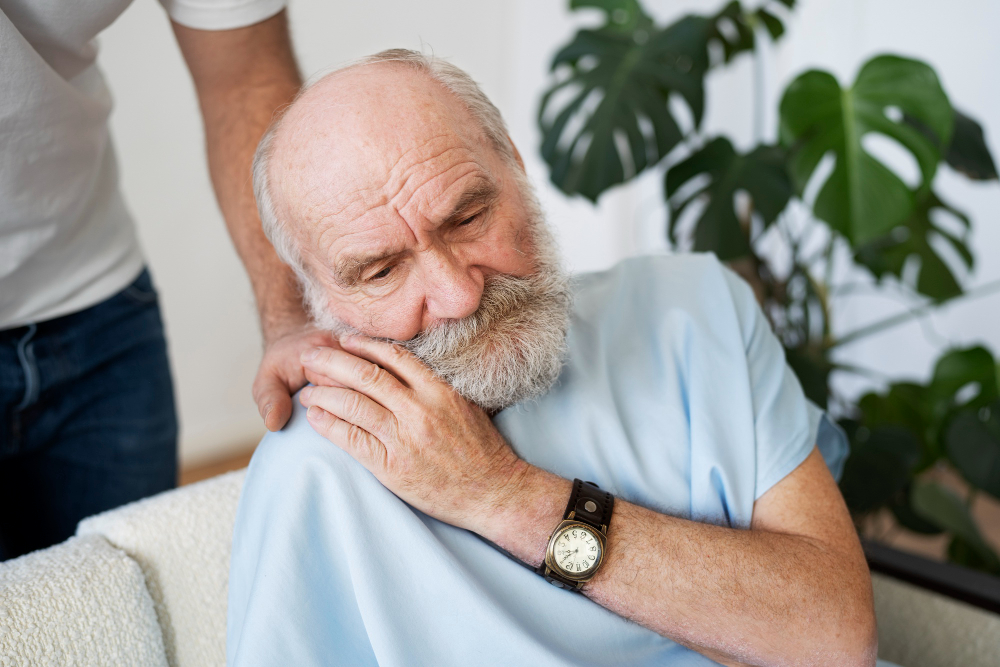
Parkinson's disease rarely affects just one person. It changes the daily life of the patient and, just as deeply, the lives of everyone who cares for them. In this episode of Just Health for the People — a public health awareness initiative by Jaslok Hospital — host Jitendra Hariyan speaks with Dr. Paresh Doshi, Director of Neurosurgery and Stereotactic & Functional Neurosurgery at Jaslok Hospital, about the symptoms, diagnosis, and cutting-edge management of Parkinson's disease.
With nearly 35 years of experience and several "firsts" in functional neurosurgery to his name, Dr. Doshi is one of the most respected voices in Parkinson's care in India and holds leadership positions in national and international functional neurosurgery societies.
Watch the full conversation here: Parkinson's Disease Explained by Dr. Paresh Doshi – Jaslok Hospital
Parkinson's disease was first documented nearly 200 years ago by British neurologist James Parkinson, though references to similar symptoms appear even earlier in Sanskrit literature, where the condition was described in terms associated with tremors. Interestingly, Dr. Doshi notes that Parkinson's diagnosis today still relies largely on the same clinical observations Dr. Parkinson made two centuries ago — it remains a clinical diagnosis rather than one confirmed by a lab test.
At its core, Parkinson's disease develops when dopamine — a key neurotransmitter in the brain — declines. As dopamine levels fall, other neurotransmitters are gradually affected too, since Parkinson's is fundamentally a neurodegenerative condition, meaning brain cells progressively wear down over time.
According to Dr. Doshi, Parkinson's disease can begin quietly in the body up to ten years before the first recognizable symptoms appear. Some of the earliest, often-overlooked warning signs include:
These early indicators are typically not recognized as Parkinson's-related. The signs that usually prompt a diagnosis are slowness of movement and tremors, along with a stooped posture. Because these symptoms can resemble normal ageing, they are frequently dismissed — Dr. Doshi shares that many patients even undergo unrelated treatments, such as spine surgery for back pain, before discovering the underlying cause was Parkinson's disease all along.
Despite major advances in medical diagnostics for countless conditions, Parkinson's disease is still diagnosed clinically — through careful patient examination rather than a blood test or scan. The same observational approach James Parkinson used 200 years ago continues to guide diagnosis today.
As the neurodegenerative process affects different areas of the brain, it can also impact cholinergic neurons responsible for cognitive function. This means some Parkinson's patients may experience memory-related difficulties as the disease progresses, alongside the more commonly recognized motor symptoms.
Genetics plays a role in only a small fraction of cases. Dr. Doshi explains that around 5–7% of cases identified today are familial (genetically linked), and this number may grow as genetic research advances. The remaining 90% of cases are "sporadic" — meaning one family member being affected does not indicate a hereditary risk for others. Genetic testing is used selectively, typically in a small percentage of patients whose presentation suggests a genetic link.
The good news, says Dr. Doshi, is that Parkinson's disease today can be managed much like diabetes or high blood pressure — with the right medication, many patients live a near-normal quality of life for 5 to 10 years or more after diagnosis, often with minimal side effects.
Treatment has also become increasingly personalized. Over the last 8–10 years, researchers worldwide have identified that Parkinson's disease can present with different types of neurotransmitter deficiencies. Depending on which type a patient has — for example, a cholinergic type versus a serotonergic type — certain commonly prescribed medications may need to be avoided, as they could cause side effects like excessive daytime drowsiness rather than benefit. Jaslok Hospital is currently conducting what Dr. Doshi describes as a first-of-its-kind study worldwide on tailoring treatment to each patient's specific Parkinson's subtype before considering surgery.
For the first several years, medication can control symptoms well. But over time, patients often experience "on-off" fluctuations — periods when medication works well, followed by periods when its effect suddenly wears off. This unpredictability can significantly affect daily life and social participation, with many patients avoiding outings or family functions for fear that their medication won't "kick in" in time. Dr. Doshi describes this as one of the most disruptive aspects of long-term Parkinson's management, both for patients and for the caregivers around them.
Parkinson's-related tremors are often "at rest" tremors — they reduce significantly once a person begins an action. Dr. Doshi encourages patients to continue working and living as normally as possible rather than withdrawing from daily activities. Simple home modifications — such as installing handles in bathrooms and around the house — can help patients manage balance concerns while preserving their independence. He emphasizes that patients should continue doing as much for themselves as possible rather than relying entirely on caregivers for routine tasks.
Exercise is considered essential in Parkinson's management. Dr. Doshi recommends gait and balance-focused exercises, along with yoga postures that emphasize core and axial stability, since these symptoms respond particularly well to yoga.
Jaslok Hospital conducted a controlled randomized study examining the effects of dance, music, and meditation on Parkinson's patients. One group received a combination of music/dance plus 15 minutes of meditation, while another group received no intervention. The results showed that this combination didn't just slow the progression of symptoms — it actually improved them, making this one of the first studies globally to demonstrate measurable improvement, not just symptom stabilization, through non-pharmacological methods.
Dr. Doshi stresses treating the whole patient, not just the disease. Anxiety, depression, and other psychological symptoms often accompany Parkinson's disease. Recognizing and addressing these aspects — rather than dismissing them — is essential to genuinely improving a patient's quality of life.
Sleep disturbances are common as Parkinson's progresses, with patients often struggling to turn over in bed or get up at night once medication effects wear off. Interestingly, Dr. Doshi notes that patients frequently report that a good night's sleep directly improves their symptoms the following day — reinforcing how closely sleep quality and disease management are linked.
When medication alone no longer provides adequate quality of life, Deep Brain Stimulation (DBS) becomes an important treatment option. First successfully performed in 1995 and approved by the US FDA around 2002, DBS involves placing electrodes deep within the brain to regulate the specific neural circuits involved in Parkinson's disease. It is now considered the gold standard of surgical management for the condition.
Dr. Paresh Doshi has performed the highest number of DBS surgeries in India and holds several notable distinctions, including performing India's first DBS surgery, operating on patients with dual pacemakers, and operating on both the youngest and oldest Parkinson's patients to undergo the procedure in the country.
Dr. Doshi believes the decision should always rest with the patient, not be imposed by the doctor. Generally, DBS may be considered when:
He notes there's no harm in simply discussing the option and gathering information, even if the patient ultimately decides against surgery.
Unlike many other surgeries, DBS requires an ongoing relationship with the treating hospital. The implanted device needs to be carefully programmed to deliver its full benefit. At Jaslok Hospital, patients are typically reviewed one to two times within the first three months post-surgery, followed by annual check-ups.
Every surgery carries risk, and DBS is no exception — an error can cause irreversible damage to brain tissue. Dr. Doshi's team has meticulously tracked outcomes since starting the program, publishing complication data in 2011 (150 cases) and again later (159 cases), showing a substantial decline in complication rates as surgical experience grew. In the last 200–300 cases, the team has reported almost zero severe complications — a result Dr. Doshi attributes to a dedicated, experienced team, consistent equipment, and years of specialized training.
Looking ahead, Dr. Doshi highlights several promising developments:
Dr. Doshi closes with a message of hope for patients and families navigating Parkinson's disease: never give up. With continuous advances in personalized medication, surgical technique, and rehabilitation approaches, patients today have more options — and more hope — than ever before.
This article is based on an episode of Just Health for the People, a public health awareness initiative by Jaslok Hospital, featuring Dr. Paresh Doshi, Director of Neurosurgery and Stereotactic & Functional Neurosurgery. Watch the full video interview here: Parkinson's Disease Explained by Dr. Paresh Doshi
For consultation regarding Parkinson's disease diagnosis and treatment, including Deep Brain Stimulation, please reach out to Jaslok Hospital's Department of Neurosurgery.