

Page Under Maintenance
This page is currently under maintenance.
Please communicate at the hospital help desk for assistance.
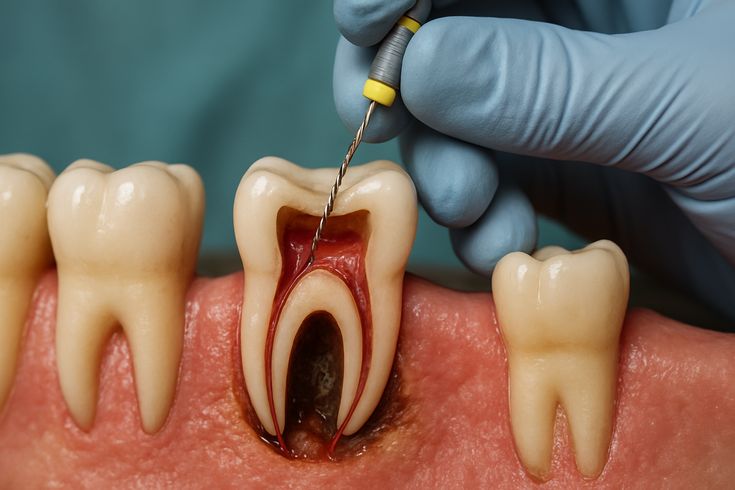
Root Canal Treatment (Endodontic Therapy) is a specialized dental procedure designed to save a severely decayed, infected, or damaged tooth. Instead of extracting the tooth, a root canal removes the infected living tissue (pulp) from the inside, cleans and disinfects the pathways, and seals it permanently.
Inside every tooth lies the pulp—a soft collection of blood vessels, connective tissue, and nerves that extends from the crown down through the roots.
When deep decay, a cracked tooth, or repeated dental trauma allows bacteria to penetrate this inner chamber, the pulp becomes infected or inflamed.
Left untreated, the infection can spread, cause severe pain, lead to a pus-filled abscess at the root tip, and eventually result in tooth loss.
Spontaneous Pain: Throbbing or sharp pain that occurs without an obvious trigger.
Prolonged Sensitivity: Sharp pain or lingering ache when consuming hot or cold foods/drinks.
Chewing Discomfort: Pain or tenderness when biting down or putting pressure on the tooth.
Gum Changes: A small, pimple-like bump (fistula/abscess) on the gums near the painful tooth that may ooze pus.
Swelling & Discoloration: Visible swelling in the jaw or a tooth that turns dark grey/brown due to pulp death.
A standard root canal typically takes one to two appointments (lasting about 60 to 90 minutes each) and involves the following steps:
Anesthesia & Isolation: Local anesthesia is administered to completely numb the area. A rubber dental dam is then placed around the tooth to keep it dry and free of saliva during the procedure.
Access Opening: The endodontist or dentist creates a tiny opening through the crown of the tooth to enter the pulp chamber.
Cleaning & Shaping: Specialized microscopic instruments are used to carefully remove the infected or dead pulp tissue from the chamber and the winding root canals. The channels are disinfected with antimicrobial solutions.
Filling (Obturation): The clean, empty canals are tightly filled with a flexible, rubber-like biocompatible material called gutta-percha, sealed with an adhesive cement to block out future bacteria.
Temporary Restoration: A temporary filling is placed to close the access hole while the tooth heals.
Because a root-treated tooth no longer has an internal blood supply inside the crown, it can become slightly more brittle over time.
To protect the tooth from fracturing under heavy chewing forces, a permanent dental crown is almost always placed over the tooth during a follow-up visit. Data shows that crowned root-canal teeth have a long-term survival rate approaching 95% to 100%.
Expected Sensation: Mild soreness or sensitivity around the gum and bite is normal for 2 to 3 days after treatment, which can usually be managed with over-the-counter pain relievers.
Diet: Stick to soft foods for the first few days and avoid chewing hard or crunchy items directly on the temporary filling until the permanent crown is fitted.
Oral Hygiene: Continue brushing twice a day and flossing daily. A root-treated tooth can last a lifetime with proper hygiene and routine dental check-ups.