

Page Under Maintenance
This page is currently under maintenance.
Please communicate at the hospital help desk for assistance.
Dental Implants & Fixed Teeth represent the modern gold standard for replacing missing teeth. Unlike traditional removable dentures or bridges that rely on neighboring teeth for support, dental implants act as permanent, independent artificial tooth roots. They restore full chewing power, prevent facial bone shrinkage, and look, feel, and function just like natural teeth.
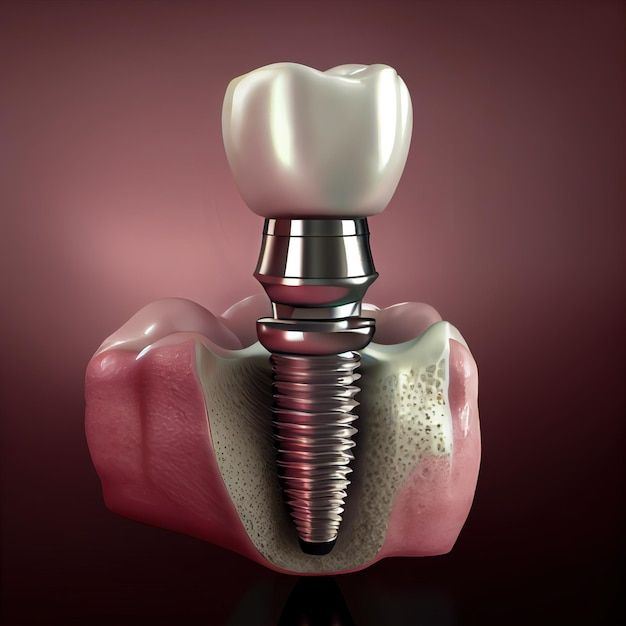
A dental implant is an engineering marvel made up of three distinct components:
The Implant Fixture (Post): A small, biocompatible titanium or zirconia screw placed directly into the jawbone. This acts as the artificial root.
The Abutment: A tiny connector piece that screws into the top of the implant post, extending just above the gum line.
The Restoration (Crown/Bridge/Denture): The visible porcelain or ceramic tooth (or set of teeth) custom-crafted to match your natural smile.
The secret to the long-term success of dental implants is a natural biological process called osseointegration.
Over a period of 3 to 6 months, living jawbone cells grow directly onto and fuse with the microscopic texture of the titanium post.
This creates an anchor that is often stronger than the root of a natural tooth.
Depending on how many teeth are missing, implants can support several types of fixed prosthetics:
Single Tooth Replacement: One implant topped with a single crown to replace an isolated missing gap without touching the healthy teeth next to it.
Implant-Supported Bridge: Replacing three or more consecutive missing teeth using two or more implants as anchor pillars instead of shaving down adjacent natural teeth.
All-on-4 / Full-Arch Fixed Teeth: A revolutionary protocol where an entire arch of upper or lower teeth is permanently fixed onto just four to six strategically angled implants. No more loose, removable dentures.
Evaluation & 3D Imaging: Comprehensive CBCT scans and digital impressions are taken to map out nerve pathways, bone density, and precise implant placement coordinates.
Surgical Placement: Under local anesthesia (and optional sedation), a small incision is made in the gum, a precision channel is created in the bone, and the titanium post is inserted.
The Healing Window: The bone fuses around the post (osseointegration) over several months. (In select cases, "immediate-load" implants allow temporary teeth to be attached right away).
Abutment & Impression: Once integrated, a healing cap or abutment is attached, and precise molds or digital scans are taken to create your permanent teeth.
Final Restorative Placement: The custom crown, bridge, or fixed arch is screwed or cemented onto the abutments, balancing your bite for optimal long-term comfort.
Pre-Surgery Care:
Medical Clearance: Managing chronic conditions like diabetes or quitting smoking to ensure optimal bone healing.
Medication Review: Pausing blood thinners if instructed by your physician.
Post-Surgery Care:
Strict Oral Hygiene: Implants cannot get cavities, but the surrounding gums can develop peri-implantitis (gum disease) if plaque builds up. Daily brushing, flossing, and specialized water flossers are vital.
Routine Professional Cleanings: Regular dental visits every 6 months to check bite stability and clean hard-to-reach areas.
Preserves Jawbone: When a tooth is lost, the underlying bone shrinks away due to lack of stimulation. Implants mimic natural roots to keep the jawbone dense and robust.
Protects Healthy Teeth: Traditional bridges require cutting down adjacent healthy teeth; implants stand entirely on their own.
Permanent Stability: Fixed teeth eliminate the embarrassing clicking, slipping, or dietary restrictions associated with traditional removable dentures.